

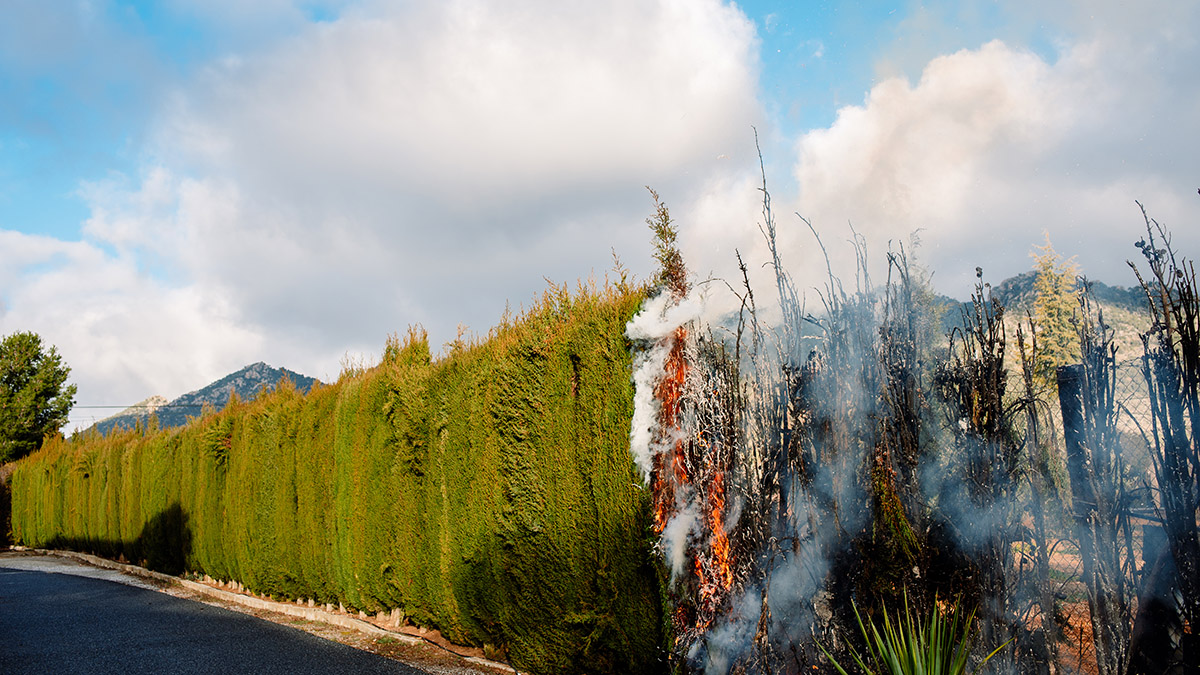
Alien invasive vegetation is one of the most underestimated drivers of fire and flood risk in South Africa. For businesses and property owners, unmanaged invasive plants materially increase exposure during wildfire seasons and extreme rainfall events, while also creating regulatory and insurance risk.
From a risk assessment perspective, alien vegetation should be treated as a core control factor in both fire and flood evaluations — not a peripheral environmental issue.
Why Alien Vegetation Matters in Fire Risk Assessments
Many invasive plant species burn hotter, faster, and less predictably than indigenous vegetation. Dense alien growth increases fuel loads, accelerates flame spread, and reduces the effectiveness of firebreaks and defensible space around buildings.
In practical fire risk terms, alien vegetation can:
- Compromise firebreak integrity and continuity
- Increase radiant heat exposure to structures
- Reduce access for firefighting vehicles
- Undermine emergency response planning
- Escalate loss severity during veld or interface fires
During fire risk assessments, the presence of unmanaged invasive plants — particularly near perimeter fencing, boundary lines, access roads, and critical infrastructure — is a clear indicator of elevated fire exposure and poor risk control.
Alien Vegetation and Flood Risk Exposure
In flood-prone areas, invasive plants often establish along rivers, streams, stormwater channels, and drainage lines. Their rapid growth and dense root systems obstruct water flow, trap debris, and alter natural drainage patterns.
From a flood risk perspective, alien vegetation:
- Increases the likelihood of localised flooding
- Exacerbates stormwater overflow during heavy rainfall
- Accelerates erosion and bank collapse
- Increases downstream flood impact and clean-up costs
Flood assessments should therefore consider alien vegetation as part of catchment-level risk, not just site-level drainage design.
Legal Duties That Affect Fire and Flood Risk
Under the National Environmental Management: Biodiversity Act (NEMBA), landowners and persons in control of land have a legal obligation to manage listed invasive species.
In the context of fire and flood risk, this includes:
- Preventing the spread of invasive plants that increase fire load or obstruct waterways
- Actively controlling or eradicating Category 1a and 1b species
- Ensuring invasive vegetation does not compromise firebreaks or drainage systems
- Allowing authorised officials access for monitoring or enforcement
Failure to comply can expose businesses to regulatory action, increased insurance scrutiny, and adverse claims outcomes following loss events.
What Risk Assessors and Businesses Should Be Looking For
When conducting fire and flood assessments, alien vegetation management should be reviewed alongside traditional controls.
Key indicators include:
- Invasive growth within or adjacent to firebreaks
- Alien plants encroaching on buildings, substations, tanks, or boundary lines
- Blocked culverts, channels, or riparian zones
- Evidence of unmanaged spread over time
- Lack of a documented vegetation management plan
These factors often signal maintenance drift, where risk controls exist on paper but are no longer effective in practice.
Practical Steps to Reduce Fire and Flood Exposure
Effective alien vegetation management requires an ongoing, structured approach:
- Identify and classify invasive plants using authoritative sources such as Environment South Africa and SANBI.
- Prioritise high-risk areas, including firebreaks, riparian zones, access routes, and asset perimeters.
- Integrate vegetation control into fire prevention and flood mitigation plans rather than treating it as standalone maintenance.
- Document actions taken, including clearing, follow-up treatments, and monitoring cycles.
- Review annually, particularly ahead of fire season or forecast heavy rainfall periods.
Early intervention reduces both loss probability and loss severity — a key consideration for insurers and underwriters.
Why This Matters for Insurance and Business Continuity
From an insurance and continuity perspective, alien vegetation is increasingly scrutinised because it directly affects:
- Fire spread and burn intensity
- Flood frequency and severity
- Effectiveness of existing risk controls
- Predictability of loss outcomes
Businesses that manage invasive vegetation proactively demonstrate better risk quality, fewer surprises at claim stage, and stronger alignment with insurer expectations.
Final Risk Insight
Alien vegetation management is not cosmetic, optional, or purely environmental. In South Africa’s climate and regulatory context, it is a foundational control within fire and flood risk assessments — and a practical lever for improving resilience, compliance, and insurability.