

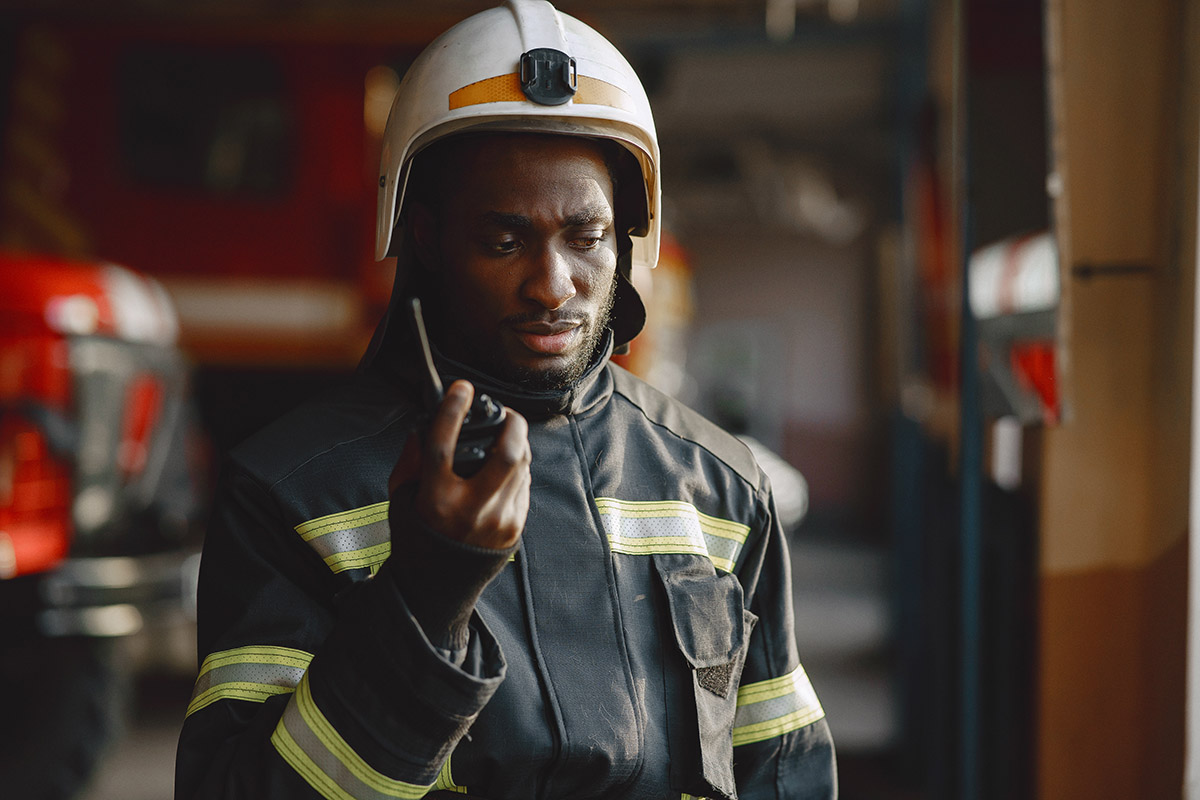
“Hello? Fire Department… Are You There?”
Eastern Cape fire response delays, raise the alarm for businesses.
When fire breaks out, the call for help signals the start of a race against time. In many parts of the Eastern Cape, fire response services are slow off the mark, leaving businesses more exposed than before. National guidelines suggest an urban response time of about 15 minutes, yet many areas now see crews arriving only after 20, 30 or even 40 minutes, depending on distance, demand and available resources.
While proposals for new fire stations and infrastructure upgrades have been raised in several municipalities, these plans have not yet translated into improved response capacity. The result is a growing gap between the moment an emergency is reported and the moment trained crews reach the scene.
This changing landscape reflects a shift in the risk environment. The early stages of a fire increasingly depend on the readiness and capability of the business itself.
What this means for businesses
When response times stretch beyond the national guideline, even a short delay can reshape the outcome of a fire. An extra 10 to 25 minutes allows a small, contained flame to develop into a far more challenging incident long before external assistance arrives.
For businesses, the implications extend across several areas of operational risk:
- Fires have more time to spread through production areas, storage facilities and critical equipment.
- Property damage increases, and the likelihood of prolonged business interruption grows.
- The responsibility for early-stage fire control shifts more heavily onto on-site teams.
- Staff readiness, internal procedures and the condition of fire equipment become decisive in limiting escalation.
These realities highlight that, in many cases, the first and most critical minutes of a fire will fall to the business itself before professional responders arrive
What businesses should do now
With response times under pressure, businesses should strengthen their internal readiness and focus on early actions that can limit the spread of a fire until assistance arrives by:
- Review and test all fire protection equipment regularly to ensure everything functions as intended.
- Assess whether additional firefighting equipment is needed in high-risk areas.
- Provide routine training for staff on basic firefighting, alarm-raising and evacuation procedure.
- Update emergency response plans so that responsibilities, communication steps and internal actions are clearly understood by all teams.
- Strengthen business continuity plans to include scenarios where firefighting assistance may take longer than the national guideline to arrive.
- Maintain good housekeeping by reducing combustible waste, clearing storage areas and ensuring electrical equipment, machinery and charging stations are properly managed.
- Review hot work procedures and ensure permits, supervision and isolation measures are followed whenever welding, cutting or similar activities take place.
- Ensure access routes for emergency vehicles are kept clear and unobstructed, both inside the property and along entry points leading to key risk areas.
- Confirm that fire doors, escape routes and emergency exits remain unobstructed and that signage and lighting are adequate for all operating conditions.
- Ensure that security teams and after-hours staff know how to raise an alarm, activate internal systems and follow the site’s emergency procedures.
While response times may vary, preparedness doesn’t have to. By focusing on prevention, readiness and strong first-line action, businesses can better safeguard their people, property and operations in a changing risk environment.
For further advice or support in strengthening your fire preparedness, reach out to Simah at info@simah.co.za .